
What system would best suit you?
The choice of a beef finishing system depends on the farm’s location and access to feed resources.
- Farms with an abundant supply of cereals or by-products like biscuit meal and straw often adopt intensive systems, which support faster growth.
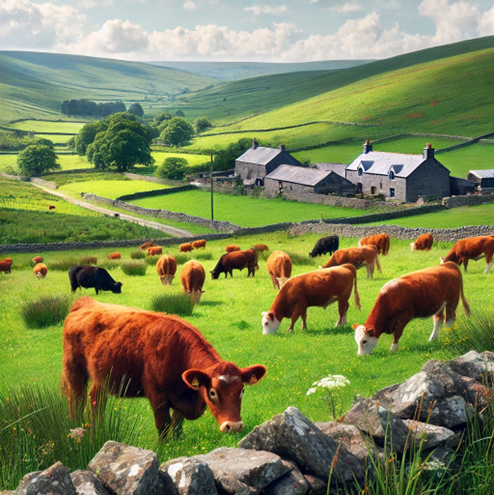
- But farms located in areas rich in pasture tend to use semi-intensive or extensive systems, where forage and grazing are the primary feed sources.
The availability and cost of feed play a crucial role in determining which system is most suitable for each farm.
Intensive System (12-15 months)
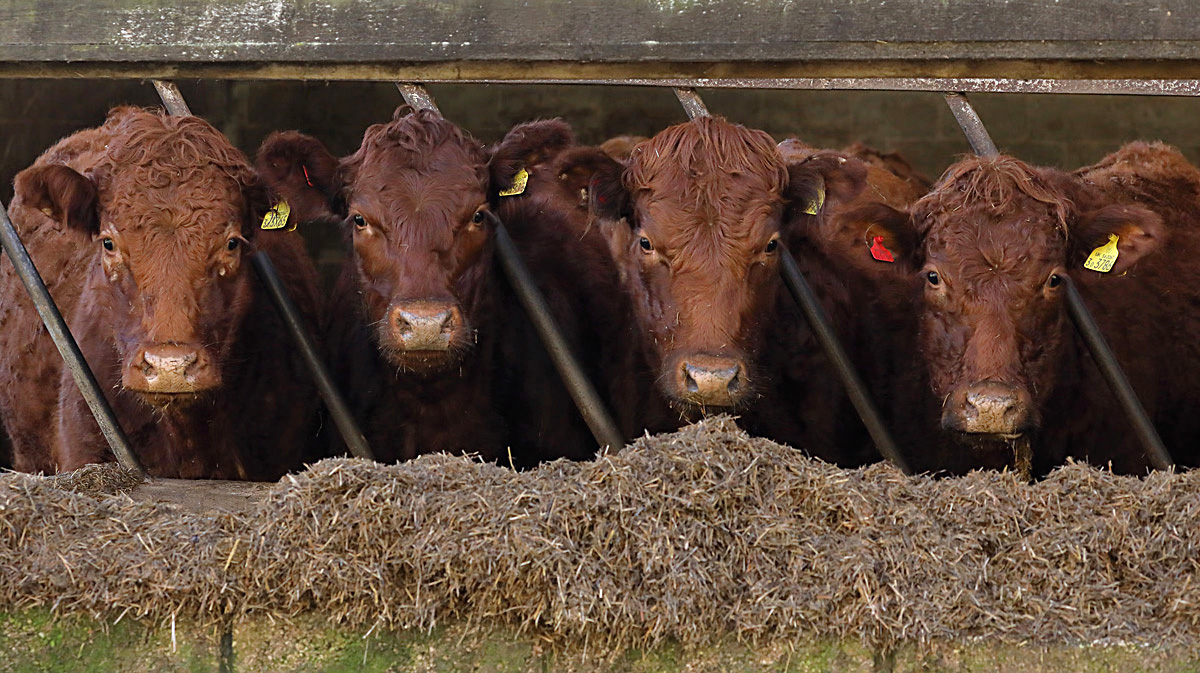
Continental cattle breeds and entire bulls are best suited to an intensive finishing system. Generally intensive systems will have better feed conversion, higher daily liveweight gains, higher feed costs per day but lower feed requirements overall.
Hover over the boxes below to see further information.
Feeding
Feeding
Growth Rate
Growth Rate
Negatives
Negatives
Suitability
Suitability
Best for breeds like continental bulls (e.g., Charolais) that are fast-growing and can efficiently convert feed to weight.
Positives
Positives
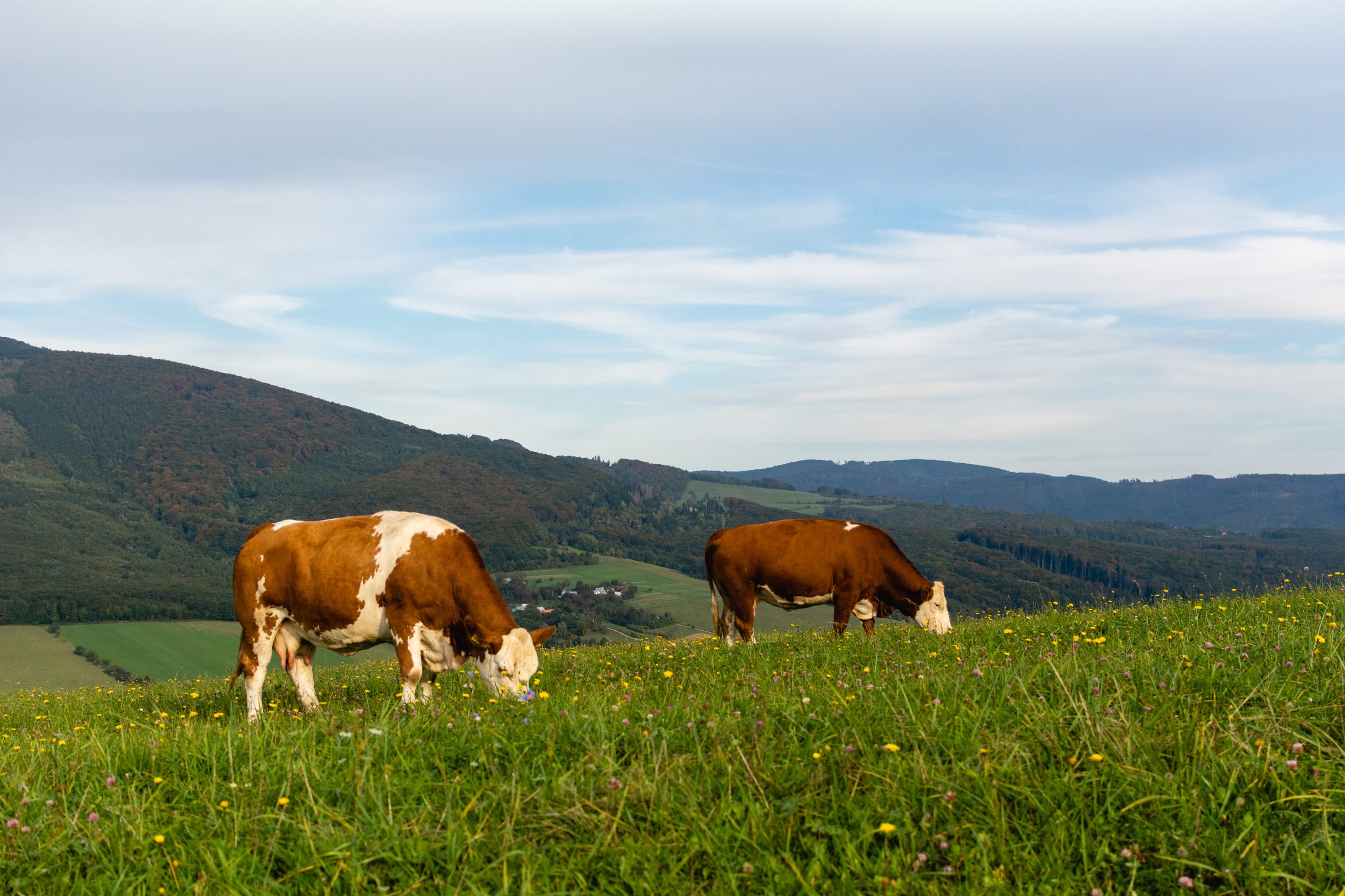
Semi Intensive (15-20 months)
A semi- intensive finishing system has periods of which the cows are out on grass, a middle winter and then a housed period at the end to finish.
Hover over the boxes below to see further information.
Feeding
Feeding
Suitability
Suitability
Works well for steers and heifers, especially from suckler herds. It requires good grassland management.
Growth Rate
Growth Rate
Positives
Positives
Negatives
Negatives
Extensive System (20+ months)
Native breeds are best suited to an extensive finishing system as they have slower growth rates which allow the cows to achieve desired weight without being too fat.
Hover over the boxes below to see further information.
Feeding
Feeding
Suitability
Suitability
Growth Rate
Growth Rate
Positives
Positives
Negatives
Negatives
Breeds
Here is a table that shows the different breeds and their place within the system.
| Bulls | Bullocks | Heifers | ||||
| Breed | Age (mths) | Weight (kg) | Age (mths) | Weight (kg) | Age (mths) | Weight (kg) |
| Holstein/Friesian | 12-14 | 550 | 15-18 | 600 | ||
| Charolais | 12-14 | 650-700 | 15-18 | 650-700 | 18-20 | 600-625 |
| Belgian Blue | 12-14 | 625-650 | 15-18 | 650-675 | 18-20 | 600-625 |
| Simmental | 13-14 | 625-650 | 15-18 | 650-675 | 18-20 | 600 |
| Limousin | 13-14 | 625-650 | 15-18 | 625-650 | 18-20 | 575-600 |
| Aberdeen Angus | 18-20 | 575-600 | 20-24 | 550-575 | ||
| Beef Shorthorn | 18-20 | 575-600 | 20-24 | 550-575 | ||
| Hereford | 18-20 | 575-600 | 20-24 | 550-575 | ||
| Welsh Black | 18-22 | 575-625 | 20-24 | 525-575 | ||
| Intensive | Semi-intensive | Extensive |
| 12-14 months | 15-20 months | Over 20 months |
© Hybu Cig Cymru
A timeline of the finishing process
See the two diagrams below which shows a breakdown of the finishing systems in the Spring and Autumn.
Typical finishing systems for spring born cattle
| System | Source | Spr | Sum | Aut | Win | Spr | Sum | Aut | Win | Spr | Sum |
| 12 months | Suckler | Suckling | Concentrates | ||||||||
| Dairy | Milk | Concentrates | |||||||||
| 18 Months | Suckler | Suckling | Forage/Conc | Grazing/Conc | |||||||
| Dairy | Milk | Forage | Forage/Conc | Grazing/Conc | |||||||
| 24 months | Suckler | Suckling | Forage | Grazing | Forage/Conc | ||||||
| Dairy | Milk | Forage | Forage | Grazing | Forage/Conc | ||||||
| 30 months | Suckler | Suckling | Forage | Grazing | Forage | Grazing | |||||
| Dairy | Milk | Forage | Forage | Grazing | Forage | Grazing | |||||
Typical finishing systems for autumn born cattle
| System | Source | Aut | Win | Spr | Sum | Aut | Win | Spr | Sum | Aut | Win |
| 12 months | Suckler | Suckling | Concentrates | ||||||||
| Dairy | Milk | Concentrates | |||||||||
| 18 months | Suckler | Suckling | Grazing | Forage/Conc | |||||||
| Dairy | Milk | Forage | Grazing | Forage/Conc | |||||||
| 24 months | Suckler | Suckling | Grazing | Forage/Conc | Grazing | ||||||
| Dairy | Milk | Forage | Grazing | Forage/Conc | Grazing | ||||||
© Hybu Cig Cymru