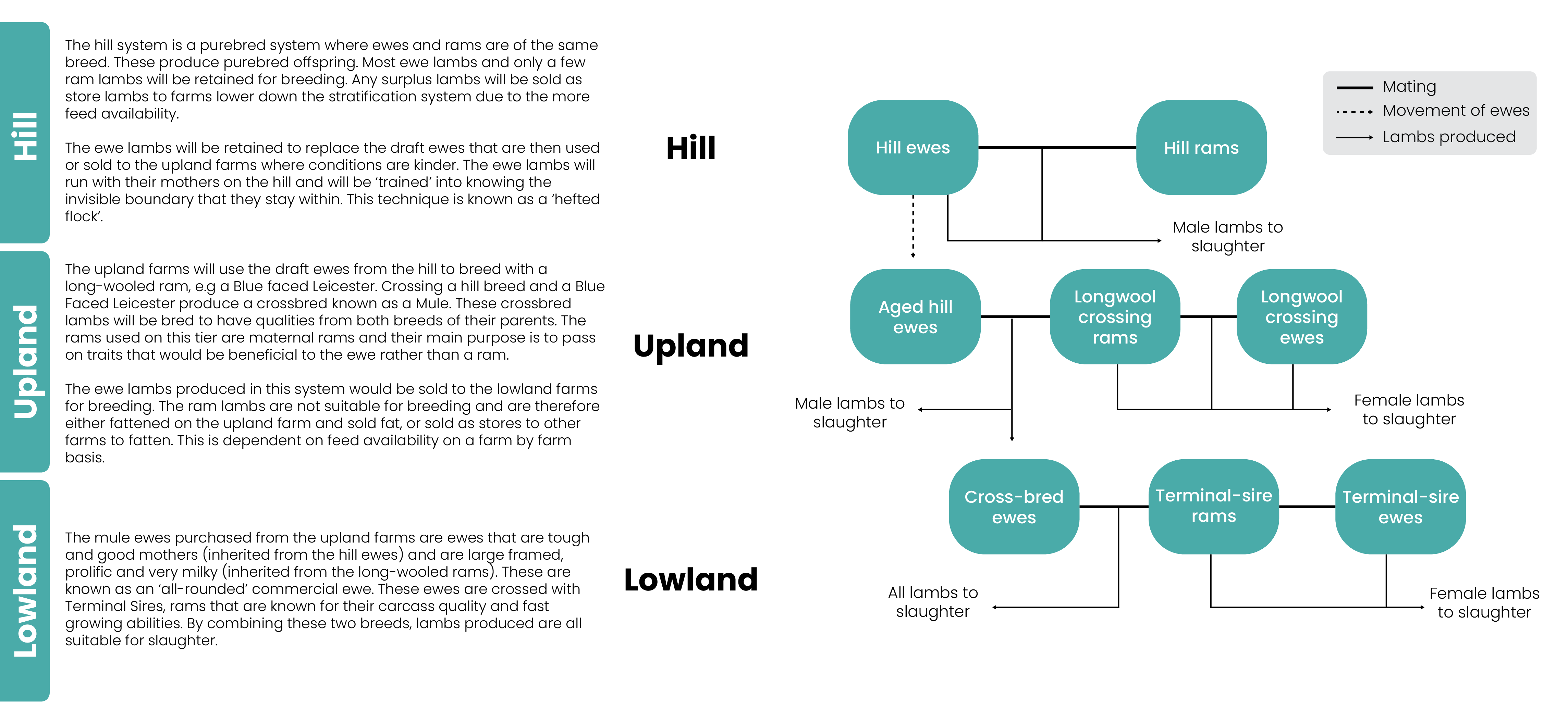
The Stratification System
The stratified sheep system is unique to the UK. The British landscape is well designed to play to the strengths of the variety of different breeds. The stratification system is how different breeds fit into the UK landscape and how they work together.
While not every sheep farm in the UK is involved in the stratified system, operating a ‘closed flock’ instead (one that has little or no exchange of breeding animals with other farms). The stratified system is widespread and very important, and many farms are reliant on such a system, some being involved across one, two or all three tiers within their business.
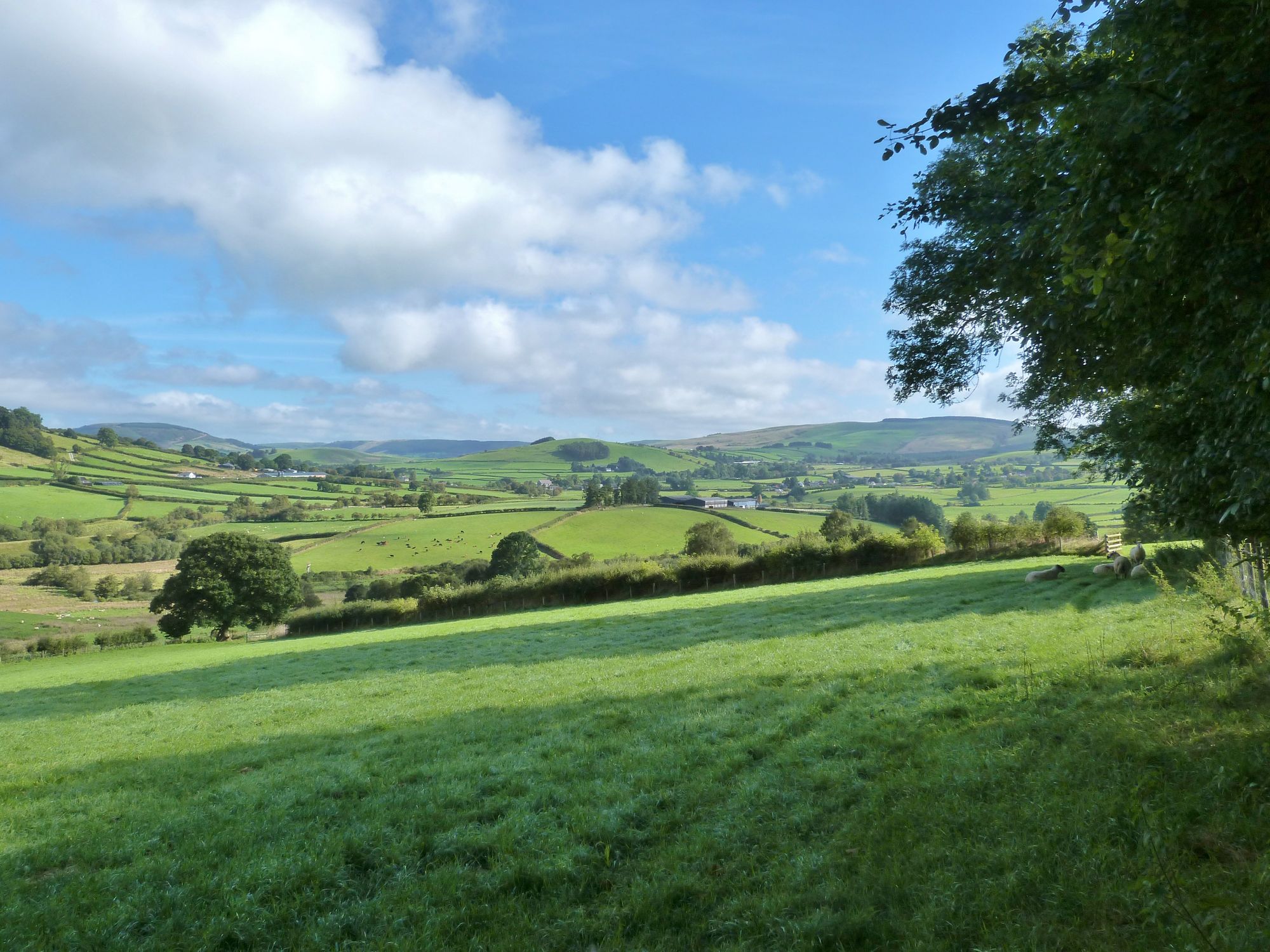
The Tiers of Land
There are three main tiers of land considered within the stratification system:
Hill
Hill land is normally elevated, rough terrain used for grazing sheep. This land is typically characterised by poor soil quality, steep slopes, and harsh weather conditions, making it land unsuitable for any intensive farming. However, it is ideal for hardy sheep breeds that can thrive in such challenging environments.
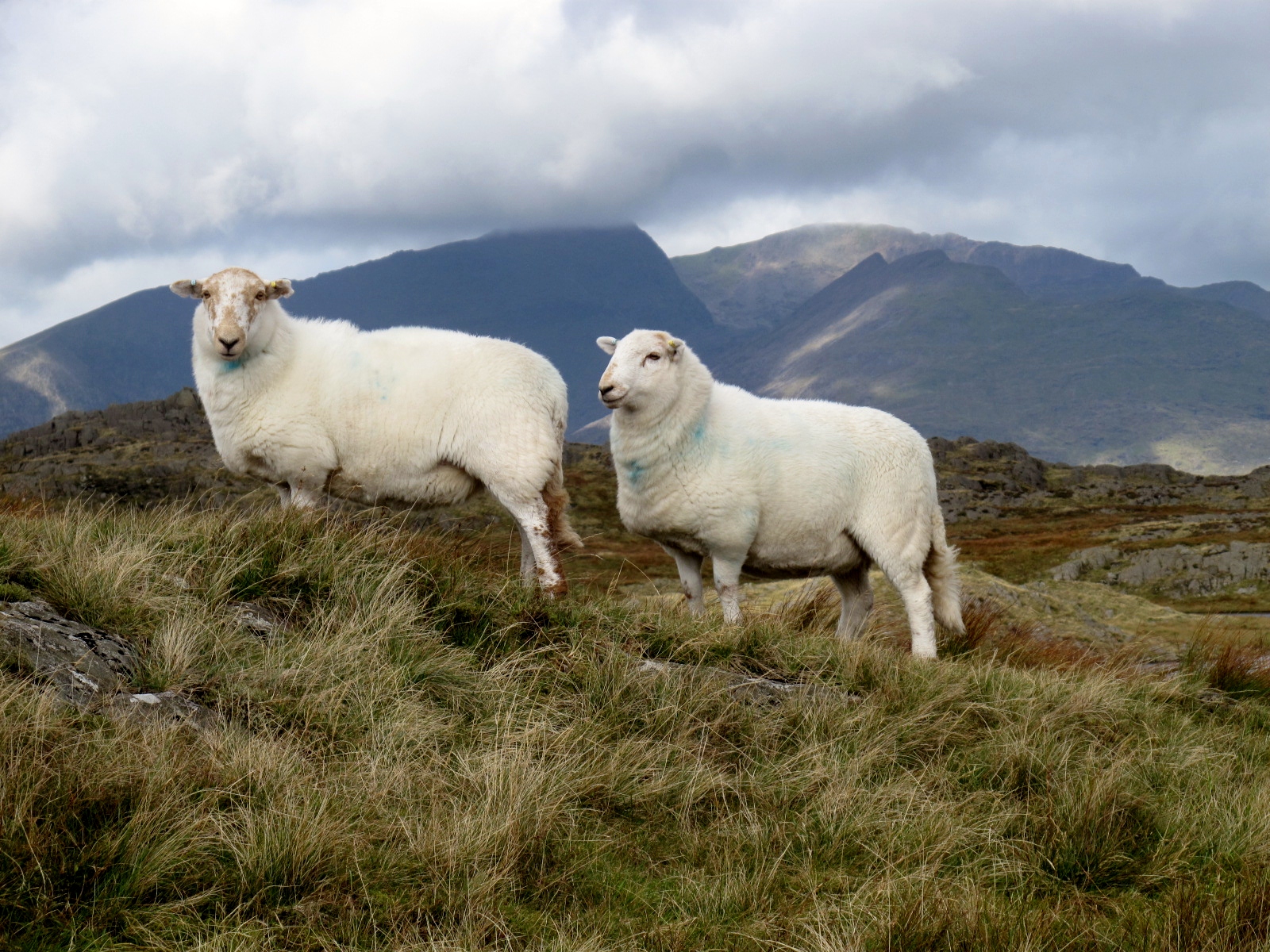
Common breeds found here:
- Welsh Mountain (several types)
- Swaledale
- Scottish Blackface
- Cheviots
- Herdwick.
- Mountain and hill areas that have harsh climates
- Short grass-growing season
- Relatively poor quality of soil
- Long winters
Sheep characteristics:
- hardy
- thick-coated
- able-bodied
- excellent mothers
- adapted to living in the harsh hill conditions
The purpose of this system is to breed Pure-bred sheep. The leftover female lambs and wether lambs, which are castrated male lambs are sold as stores to upland/lowland farms to be fattened. Older ewes that have lambed for many years previously are sent to the milder climates of the uplands and crossed with long wool breeds to produce Mules and half-breds.
Upland
The Upland is the second tier of land within the stratified system. It’s an area that’s higher compared to surrounding lowland regions but lower than the hill. The upland is made up of smaller fields enclosed by fences and/or hedgerows. This provides the sheep shelter and protection from the unforeseen weather conditions during Winter. In comparison, there’s little shelter on the hill land with limited fences except for the fence that circulates the whole hill.
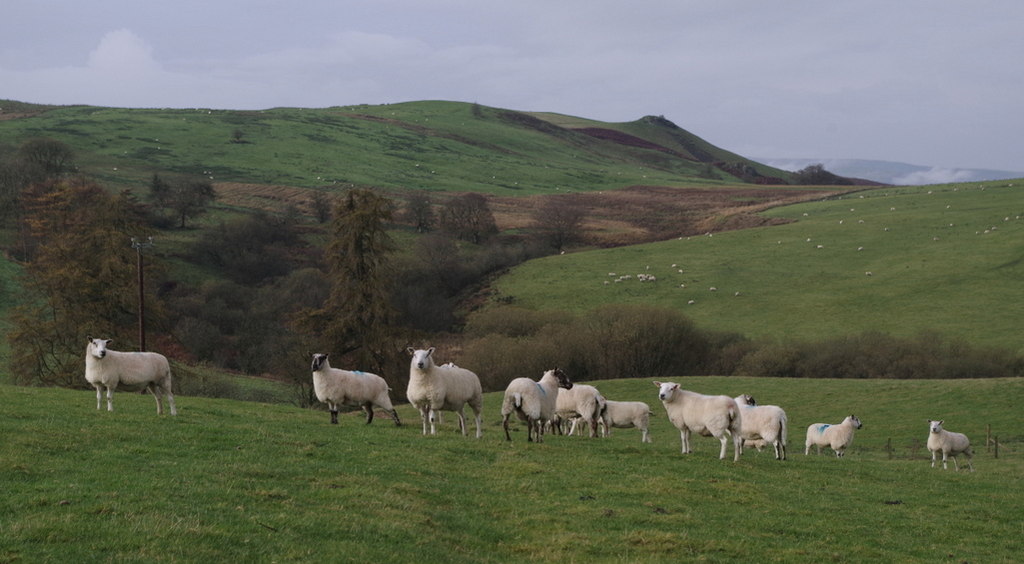
Female hill breeds mated with other breeds:
- Bluefaced Leicester
- Border Leicester
- Teeswater
- Wensleydale
- Devon & Cornwall Longwool.
Characteristics of the sheep:
- More prolific than hill breeds
- Cope better on the lower, easier terrain
- Mules inherit the mothering abilities of hill relatives and the prolificacy of upland relatives.
Within the stratification system the main purpose of the upland is so that the older ewes that are drafted from the hills, known as draft ewes, can continue to breed but in nicer conditions. They are mated with longwool upland breeds to produce Mule lambs. Female Mule lambs are farmed in the lowland farms and used as the main breeding stock breed. Male lambs are reared for meat, either in the uplands or on a lowland farm where there is more grass available.
The Hill and Upland tiers are often a part of the same farming business. The hill land is common grazing land and farmers on the upland farm own rights to these hill areas. Quite often they will have two flocks that work side by side. The hill flock will come down to the upland to lamb, but then will return to the hill and not come back to the farm until shearing or weaning times. The upland flock will stay on the upland fields as they’ll have better quality lambs that will need more attention from the shepherd.
Lowland
The lowland tier is the third and final tier of land in the UK sheep stratification system. The land is of higher value due to the quality of soil it possesses and the potential it has for better crop and grass production.
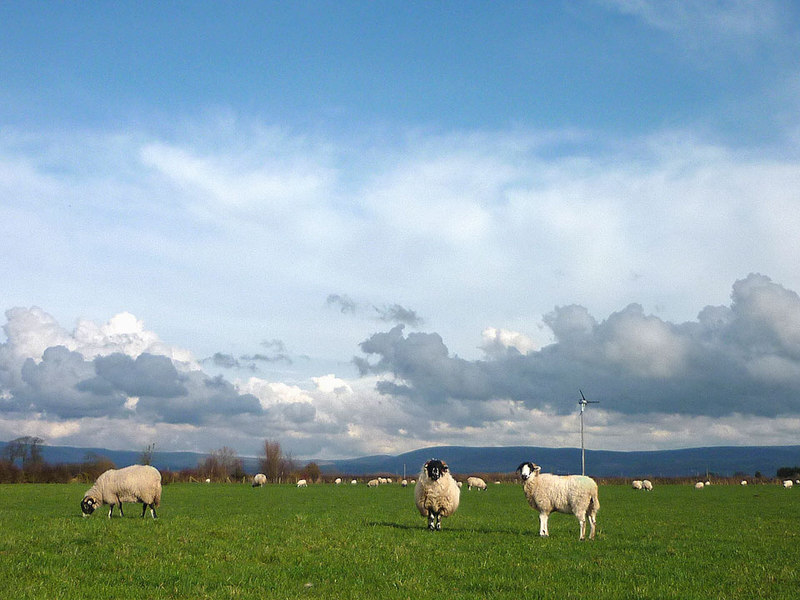
Sheep:
- Texel, Suffolk
- Charollais
- Clun Forest
- Oxford, Hampshire and Dorset Down
- These breeds can be used as terminal sires (an animal used to produce market animals for slaughter / meat production).
The land on the lowland is much more fertile and farms can introduce a mixed farming approach where crops are grown alongside keeping livestock. The climate is warmer with less rainfall, but the ewes that are farmed in the lowland are very prolific (higher ovulation rates). This means they’ll be lambing at a higher percentage than those ewes on the hill and upland. The ewes will be rearing more lambs which means they’ll need better quality grass to ensure high levels of milk production.
Sheep characteristics:
The characteristics of the terminal sires would be mixed with the mule traits to produce a lamb that would grow fast and have a heavier frame. These are all traits needed for quality lamb carcases.
On the lowland sheep farms, Mule ewes mated to a lowland terminal sire breed to produce crossbred lambs. Most lambs are reared for meat production. The flatter fields and better weather conditions, alongside the larger more conformed lambs inherited from the terminal sire mean these lambs grow faster and produce more meat in less time. Slower growing lambs join the store lambs that have arrived from the hill and upland areas fatten, potentially on root crops over the autumn and winter months.
When sheep are found on lowland farms, they are a part of arable rotations, where fields that have grown crops for a number of years are put to grass to help improve the soil. Sheep then are used as an extra enterprise on the farm to graze and make use of this grass.
How the Three Tiers of Land Work Together