
Common Sheep Breeds in the UK
There are thought to be more sheep breeds in the UK than any other country in the world.
There are more than 60 different pure breeds of sheep found in the UK, and up to 90, when you consider all the crossbreeds and composites. Breeds all have their own characteristics and suitability for a variety of landscapes, often originating from a specific part of the country. These sheep and the people who look after them have shaped the landscapes we are familiar with and created the communities that keep rural areas alive.
There are two groups of breeds, those that are ‘native’ and those that are ‘continental’ breeds.
Hover over the boxes below to see further information.
Native
Native
Continental
Continental
Continental breeds are breeds that originate from mainland Europe, as opposed to breeds native to the British Isles. These breeds are often introduced to other regions, such as the UK, to improve certain traits in local livestock, such as growth rate, meat quality, or milk production.
Hill Breeds
Hill breeds are those that are suitable to live on the Hill land. They are tough, hardy and the females have good mothering abilities. On the hill the breeding is usually kept pure because when grazing the hills they are usually bred into hefted flocks.
Welsh Mountain
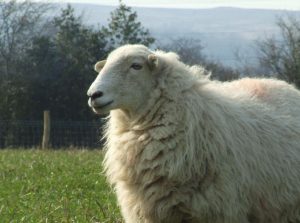
Welsh Mountain
Appearance:
- Moderate length and hight
- Broad forehead and muzzle
- White or slightly tanned face and legs
- White fleece
- Black or speckled nose
- Males are normally horned
Breed attributes:
- Maternal hill breeder
- Females that carry excellent mothering ability
- They thrive in extreme environments
Commercial desirability:
- Survivability and versatility of the breed
- Maternal attributes of the female
- Carcase quality inherited from the males
Scottish Blackface
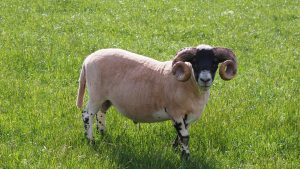
Scottish Blackface
Appearance:
- Black or black-and-white faces and legs
- Horned breed
Breed attributes:
- Maternal hill breed
- Females have a strong mothering ability in extreme environments
Commercial desirability:
- Sheep for every climatic condition
Swaledale
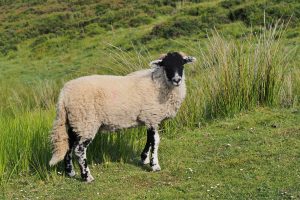
Swaledale
Appearance:
- Black face with white markings around the eyes
- White muzzle
- Low, round, wide horns
- Coarse fleece that can vary in colour from white to grey
Breed attributes:
- Maternal hill breed
- Females are excellent mothers that can rear lambs in exposed environments
- Females are good foragers
Commercial desirability:
- Bold, well fitted breed that can cope with harsh conditions
Herdwick
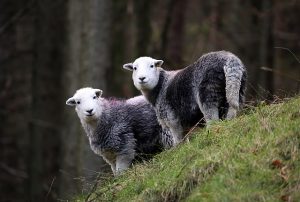
Herdwick
Appearance:
- White face and legs
- Blue-grey fleece
- Lambs are born with black wool that changes colour as they mature
- Sturdy and strong-boned
- Males can have horns
Breed attributes:
- Hardy breed with strong hefting ability
- Live in wet and wild conditions
- Slow maturing breed
Commercial desirability:
- Good confirmation
- Thrive with little or no supplementary feeding
Cheviot
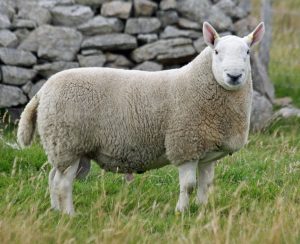
Cheviot
Appearance:
- White face and legs
- Dense white fleece
- Fleece forms a ‘ruff’ behind the ears
- Males are sometimes horned
Breed attributes:
- Hardy, maternal breed
- Females have a good mothering ability
- Fast maturing lambs
Commercial desirability:
- Can live off the hill all year round
- Produce quality lambs for the food chain
Upland Breeds
Upland breeds are those that are suitable to live on the region between the hill and the lowland. These breeds are less hardy than the hill breeds, and have a tendency to be more prolific, producing more lambs. They are milky ewes, able to produce large quantities of milk which coincides well with their high prolificacy levels.
Speckle
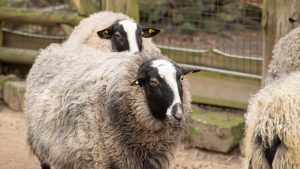
Speckle
Also known as Beulah Speckled Face or Eppynt Hill & Beulah Faced Speckled
Appearance:
- Speckled face and face – predominantly black with white markings
- White fleece
- No horns
Breed attributes:
- Developed from the mountain sheep
- Slightly bigger and less extreme than the mountain sheep (which it was developed from)
- Hardy upland sheep
- Can produce purebred lambs to thrive in harsh environments
- Can produce crossbred commercial lambs for the food chain
Commercial desirability:
- An ideal cross for terminal sire breeds to produce lambs of good carcase quality
Blue Faced Leicester
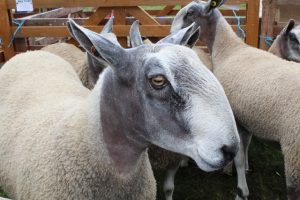
Blue Faced Leicester
Appearance:
- Blue skinned head showing through white hair
- Characteristic Roman nose
- Known for standing tall and proud
- Alert eyes
- Long upright ears
Breed attributes:
- Hardy
- Early maturing
- Prolific
Commercial desirability:
- Most popular crossing sire in the British Isles
Border Leicester
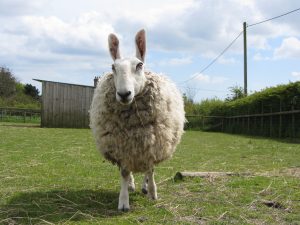
Border Leicester
Appearance:
- Large, hornless sheep
- White, demi-lustrous wool on its body – but not on its legs and face
- Prominent ears that are upright and point upwards
- Roman nose
Breed attributes:
- Good mothering ability
- Fast growing, early maturing lambs
Commercial desirability:
- Largest indigenous breed in the British Isles
- Can produce Mule sheep that are versatile to many farming systems
Teeswater
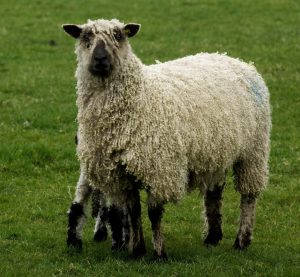
Teeswater
Appearance:
- Large, long-woolled breed
- White or greyish blue face with dark markings around the nose and ears
- Characteristic topknot of fleece falling over its face
Breed attributes:
- Large, prolific sheep
- Fine, long-stapled fleece
- Hardy breed
- Ability to produce medium-sized lambs
Commercial desirability:
- Vital as a crossbreeding sire
- Suitable to harsher climates
- Distinctively different longwool breed
Kerry Hill
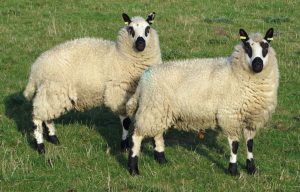
Kerry Hill
Appearance:
- Proud stance
- Upright ears
- White face with distinctive black markings around the nose and eyes
- Dense white fleece
- No horns
Breed attributes:
- Females have good mothering ability
- Sturdy and adaptable breed
Commercial desirability:
- Striking appearance attractive to smallholders
Lowland Breeds
Within the system, the Lowland breeds are at the part where creating a fat lamb is important. The ewes are usually cross-bed or half-bred ewes. The mixture of breeds result in them obtaining the optimum characteristics for producing and rearing quality lambs. The rams used have large frames and carcass quality which results in lambs being suitable for the fat market trade.
Welsh Mule

Welsh Mule
Appearance:
- Medium sized sheep
- White fleece
- Black and white mottled face and legs
- Facial colouration varies depending on breeding
Breed attributes:
- Sought-after mothers to be crossed with terminal sire breeds to produce lambs for the food chain
- The females combine the prolificacy and milkiness of their sire with the hardiness and longevity of their dam
Commercial desirability:
- Good mothering and foraging abilities
- They have the ability to adapt to upland and lowland environments
Texel
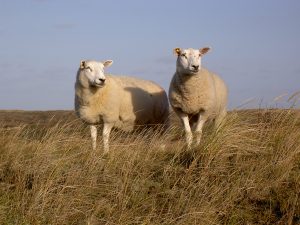
Texel
Appearance:
- Medium-sized, long rectangular body
- Prominent muscles
- White, hornless breed
- Broad head
- White face and black nose
Breed attributes:
- Terminal sire breed to produce lambs for the food chain
- Prominent muscles, long loin and lean meat
- Texel Mule and Texel cross females are becoming increasingly popular as a breeding female
Commercial desirability:
- Efficient for lamb production
- Fast growing lambs that stay lean
Suffolk
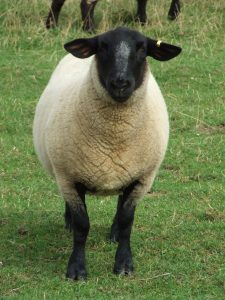
Suffolk
Appearance:
- Distinctive black face
- Downturned ears
- White, dense fleece
- Black legs
Breed attributes:
- Large terminal sire
- Its purpose is to produce quality lambs with good confirmation and growth rates for the food chain
Commercial desirability:
- Fast-growing lambs – meaning they are ready for market earlier, resulting in reduced input costs
- The females have high milk output, hard hooves and easy lambing traits
Charollais
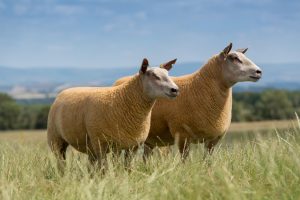
Charollais
Appearance:
- Large, well-muscled breed
- Pinkish head with creamy / sandy hair, but no wool
- White fleece
- Distinctive white flash above each eye
Breed attributes:
- A terminal sire breed with fine bones to produce good meat –to– bone ratio in lambs for the food chain
- Ewes are prolific, easy lambing and rear fast-growing lambs
Commercial desirability:
- Second most popular terminal sire in the UK
- Excellent fleshing qualities and growth in prime lambs
Hampshire Down
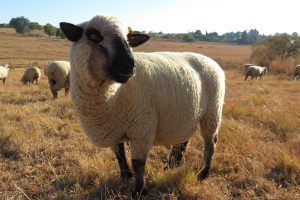
Hampshire Down
Appearance:
- Broad, strong animals
- Dark brown / black face and ears
- White wool covering the body and stretching up onto the head
Breed attributes:
- Native terminal sire breed
- Produces quality lambs for the food chain
- Fast maturing off pasture and low-input systems
- The females are long-lived and easy lambing
Commercial desirability:
- Highest eye muscle scores of any breed – resulting in excellent lamb chops for the food chain
- In recent years there has been a rapid progression in carcase quality and growth rates