
Fluke and Worm burden in sheep
Fluke and worm burden in sheep refer to parasitic infections that can seriously affect their health, productivity, and welfare. Both are common issues for sheep farmers and managing them effectively is critical to maintaining a healthy flock.
Here is a brief overview of the different parasitic issues for sheep. Further reading would be necessary to fully understand the full cycles.
Liver Fluke (Fasciolosis)
Liver fluke is a parasitic infection caused by a flatworm called Fasciola hepatica. It mainly affects the liver of the sheep but can also affect other livestock like cattle.
Life Cycle
Symptoms in Sheep
Fluke infection can lead to liver damage and even death if untreated. Common symptoms include:
-
- Weight loss
- Anaemia (pale gums or eyes)
- Swelling under the jaw (often called “bottle jaw”)
- Poor growth and production
- Diarrhoea in severe cases
There are three types of liver fluke disease:
- Acute fasciolosis: Sudden death caused by immature flukes migrating through the liver.
- Subacute fasciolosis: Causes liver damage, weight loss, and anaemia.
- Chronic fasciolosis: Results in gradual weight loss, poor fleece quality, and reduced fertility.
Control and Prevention
- Flukicides (drugs that kill fluke) are used to treat liver fluke infections, but careful management is required to prevent resistance.
- Managing grazing areas to avoid wet, marshy fields and rotating pastures can reduce exposure to fluke.
- Regular monitoring of fluke in the flock through faecal tests or blood tests can help identify the infection early.
Common types of worms found in sheep
- Haemonchus contortus (Barber’s Pole Worm): One of the most dangerous worms. It feeds on blood and can cause severe anaemia.
- Teladorsagia (Ostertagia) circumcincta: Affects the stomach lining, leading to poor digestion and weight loss.
- Trichostrongylus spp: Damages the small intestine, causing diarrhoea and weight loss.
- Nematodirus battus: Affects young lambs and causes sudden outbreaks of diarrhoea, dehydration, and death.
Symptoms and Diagnosis of worms
- Weight loss and poor body condition
- Diarrhoea (often called "scouring")
- Pale gums and eyelids (a sign of anaemia)
- Bottle jaw (swelling under the jaw caused by low protein levels)
- Poor wool quality
- Reduced growth rates in lambs
- Fecal Egg Count (FEC): This is the most common diagnostic tool. A sample of the sheep’s faeces is examined under a microscope to count the number of parasite eggs. This helps to assess the severity of the worm burden and the need for treatment.
- Clinical Signs: Severe infestations can be diagnosed through visible symptoms, such as lethargy, pale gums, and bottle jaw.
How to control worms in sheep
- Deworming (Anthelmintic Treatment): The use of deworming medications (anthelmintics) helps reduce the worm burden. However, overuse can lead to anthelmintic resistance (when worms no longer respond to treatment).
- FAMACHA Method: A practical tool that measures anaemia by looking at the colour of the sheep's lower eyelid, which helps determine the need for deworming, especially for Haemonchus infection.
- Grazing Management: Rotating pastures and avoiding overgrazing reduces the number of infective larvae available on pasture.
- Breeding for Resistance: Some breeds or individuals are naturally more resistant to worms and can be selectively bred.
- Targeted deworming: Only deworm sheep showing symptoms or with high FECs(faecal egg counts), rather than deworming the entire flock.
- Pasture management: Rotate sheep on different pastures and avoid grazing on contaminated or overgrazed land.
- Nutrition: Well-fed sheep are better able to resist and recover from worm burdens.
- Rising Concern: Resistance to common dewormers is a growing problem in sheep farming, requiring more careful use of anthelmintics and integration of non-chemical control methods.
- Rotating Dewormers: Farmers are encouraged to rotate between classes of anthelmintics and to only treat sheep that need it, rather than blanket treatments.
Choosing the correct dewormer
Before Treatment
Most worms in the sheep are susceptible to the dewormer, and only a few are resistant.
Post-Treatment
Reproduction of Resistant Worms
Multiple Treatments
Reduced Efficiency
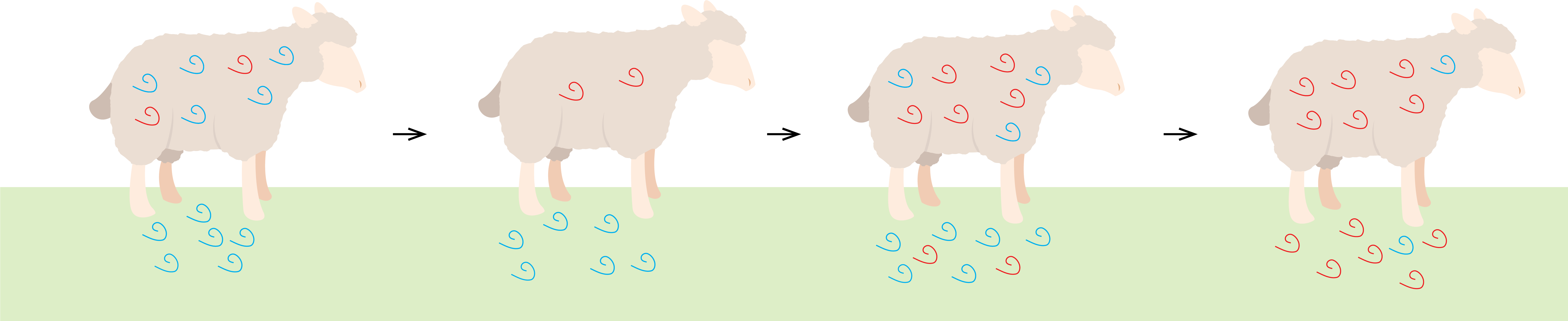
Early Stages: Most worms are blue (susceptible), and treatment works well, with only a few red (resistant) worms surviving.