
Body Condition Score
Here’s how it generally works:
In essence, BCS gives a snapshot of a sheep’s overall condition and helps in making decisions about their care and management.
Scoring System
Sheep are scored on a scale, usually from 1 to 5, where 1 is very thin and 5 is very fat. Some systems might use slightly different scales, but the idea is similar.
Assessment Points
To score a sheep, you look at specific areas of its body, such as the backbone, ribs, and hips. You assess how much fat and muscle cover these areas:
Score 1: Very thin, bones are prominent and there's little fat or muscle.
Score 2: Thin, bones are visible but there's a bit of fat covering them.
Score 3: Average or ideal, the bones are not prominent and there's a good amount of fat and muscle.
Score 4: Overweight, there's noticeable fat cover and the bones are not visible.
Score 5: Very fat, excessive fat cover and bones are not palpable.
Purpose
Scoring helps farmers manage the health and productivity of their flock. For example, a sheep that's too thin might need more feed or a different diet to gain weight, while a sheep that's too fat might need a different feeding regimen to prevent health issues.
How to body condition score
Watch the video below to learn how to assess body condition score.
Condition score 1
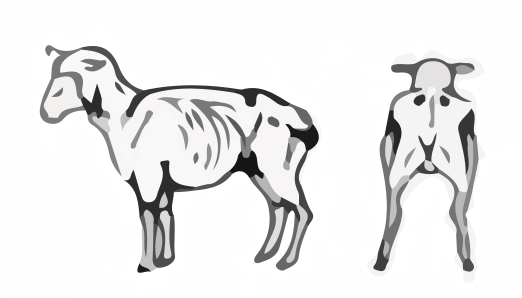
Condition score 1
- Appearance angular and narrow
- Backbone raised and sharp
- Hollow behind ribs
- Tail feels bony
- Neck bones prominent
Condition score 2
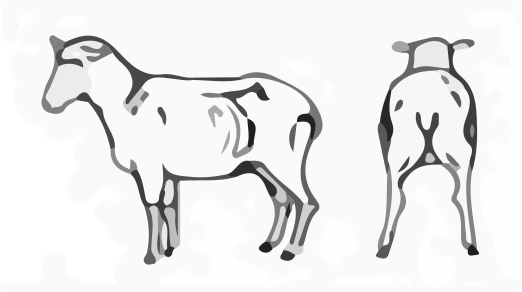
Condition score 2
- Backbone raised but smooth
- Ribs are easily felt
- Tail bone easily detectable
- Thin neck
Condition score 3
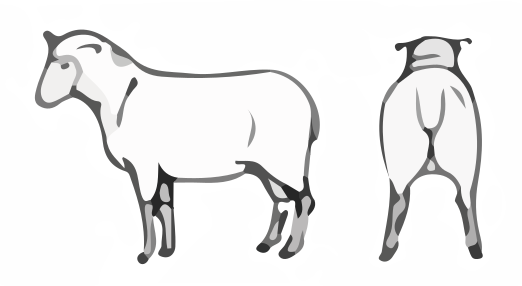
Condition score 3
- Backbone slightly raised
- Ribs smooth, can just be felt
- Tail bones barely detectable
Condition score 4
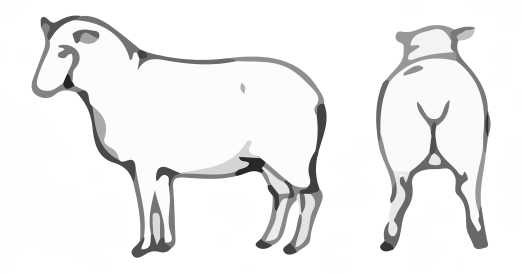
Condition score 4
- Appearance well rounded
- Backbone can just be felt
- Ribs are covered
- Tail firm and rounded
Condition score 5
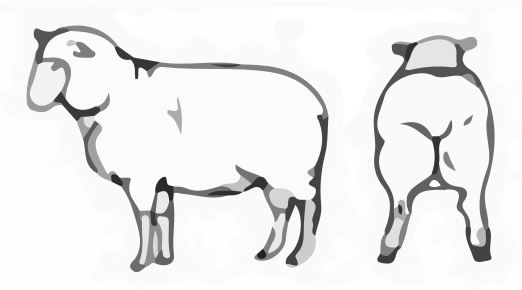
Condition score 5
- Appearance very well rounded
- Backbone barely detectable
- Ribs cannot be felt
- Tail fat and broad
When to body condition score
Don’t forget the rams – Aim for a fit ram between 3.5 and 4 when tupping. It’s important to include the BCS in the ram’s MOT at least 6 weeks before the tupping period.
If sheep are not in the correct body condition score during these specific times in the calendar, it is important that they are isolated from the flock to receive specific nutrition and treatment to help them gain or lose condition where appropriate.