
Care of the ewe and lamb(s) post lambing until turn-out
After a ewe has lambed, but before turning her and her lamb(s) out to grass, a shepherd needs to perform several important tasks to ensure the health and well-being of both the ewe and her newborn lambs. These tasks help to minimise risks, promote bonding, and prepare the animals for the transition to outdoor living.
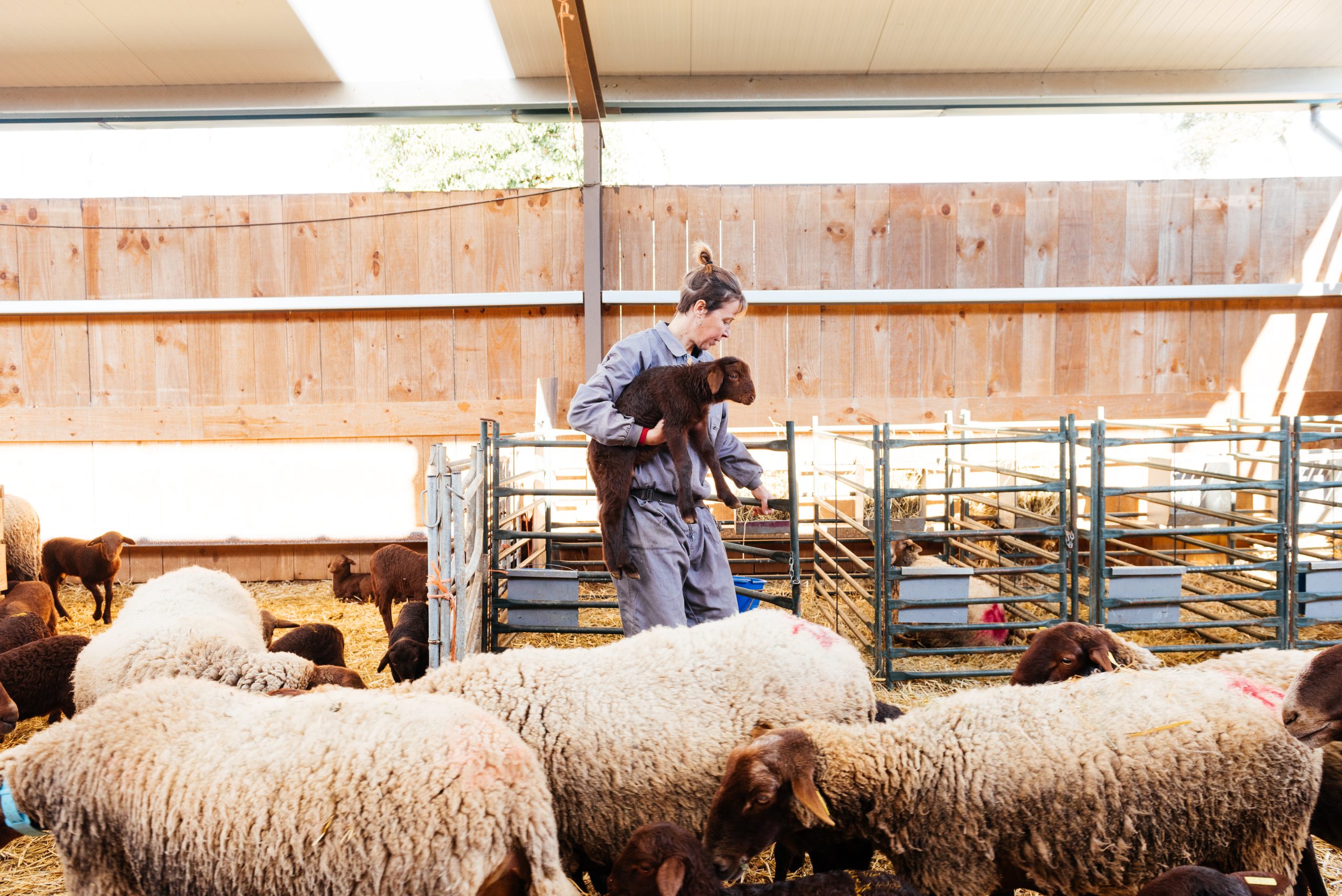
Here are the main checks of the ewe and her lamb(s) after lambing, right until turn out.
Ensure Bonding
Immediately after lambing, the shepherd should closely monitor the ewe and her lambs to ensure that bonding occurs. The ewe should be licking her lambs, which helps with bonding and stimulates the lambs to stand and nurse. This will start in the big pen when lambed, but must continue after putting them into the individual pen.
Colostrum Intake
The lambs need to nurse as soon as possible, ideally within the first hour of birth, to ingest colostrum. Colostrum is rich in antibodies and nutrients, essential for the lambs' immunity and energy. If the lambs are struggling to nurse, the shepherd may need to assist by helping the lamb latch onto the ewe's teat or by milking the ewe and feeding the lambs with a bottle.
Navel Care
Assess Ewe
Castration and Tail Docking
- Castration: If castration of male lambs is part of the management practice, this is usually done within a few days of birth using a rubber ring or other methods. Castration is often done to manage flock behaviour, meat quality, and prevent unwanted breeding.
- Tail Docking: Tail docking is sometimes performed to reduce the risk of flystrike (a condition where flies lay eggs in the wool around the tail, leading to maggot infestations). This procedure is typically done within a few days of birth using a rubber ring.
Pairing Ewes and Lambs
Numbering or pairing ewes and lambs is important so that it is easier to pair them up when turned out to be a field. If there is an issue with a lamb, it is easy to find her mother.
Turning to a Nursery Pen
This is when the ewe and her lambs would be turned into a larger pen with other ewes and lambs. This gives the lambs an opportunity to familiarise themselves with following and finding their mother. Ewes with single lambs on some farms would be turned from the large pen straight into the nursery pen, bypassing the individual pens.
Tagging Lambs
Tagging lambs is necessary if they are registered with breed societies, but all commercial lambs should be EID tagged within the first 9 months of life, or before they leave the holding they were born on, whichever is sooner.