
Estrus Cycle
The oestrus cycle in sheep is the process where ewes come into heat and are ready to mate. The cycle lasts about 17 days, and during this time, the ewe is fertile and can mate for about 24-36 hours. If she doesn’t get pregnant, the cycle repeats until she is successfully mated. There is a complex list of hormones that play a role within the oestrus cycle.
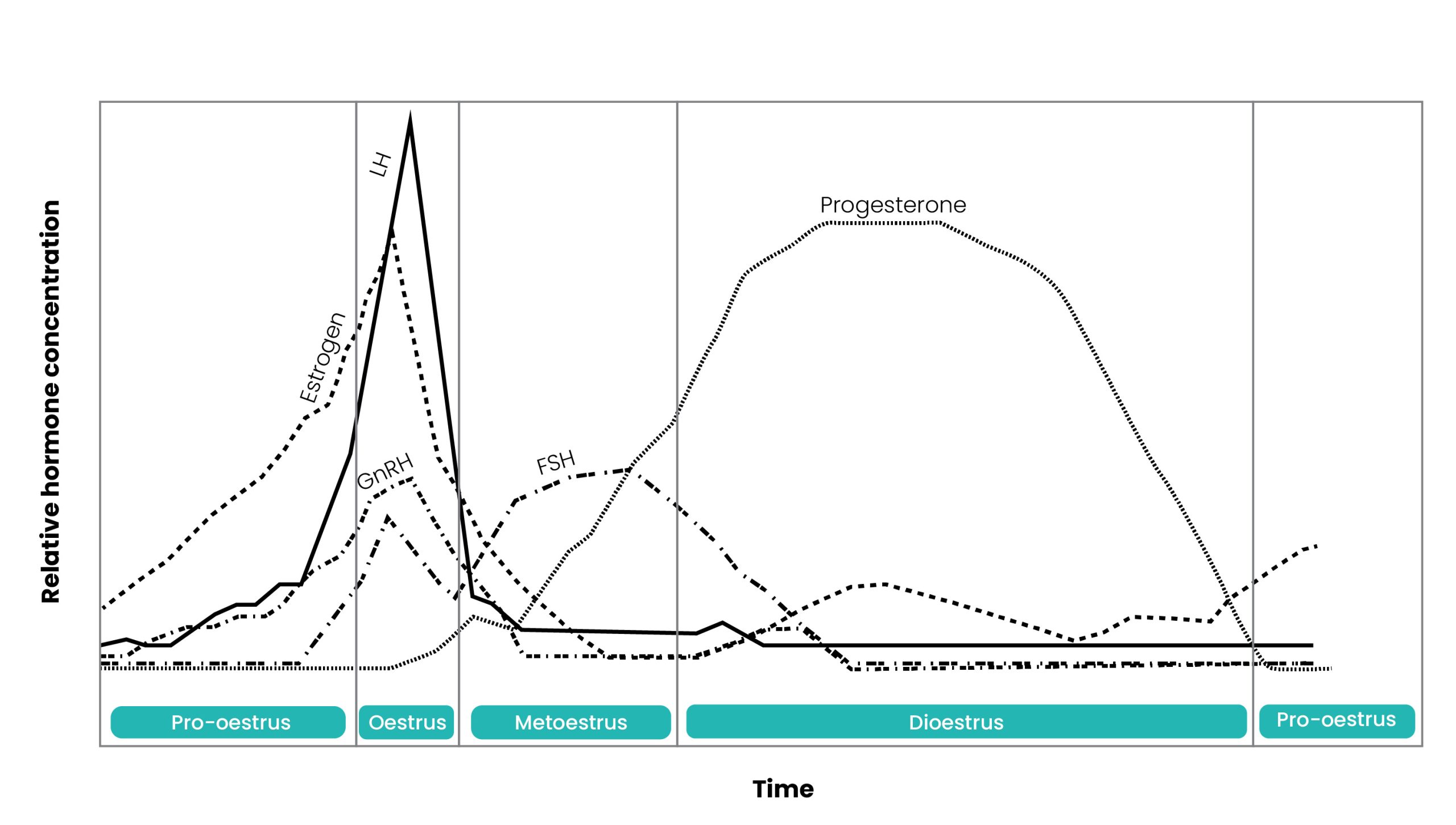
Take a look at this graph that shows how the different hormones working together:
Pro-oestrus
As the follicles grow, they create estradiol, which is fed back to the brain and causes the ewe to come into heat. The amount of estradiol being sent to the brain increases as the maturing follicles get larger.
Estrus
This is the period of sexual receptivity when the ewe is in “heat.” Estrogen levels peak, and ovulation occurs. When the follicles reach 0.5-1 cm in diameter, blood concentration of estradiol peaks, and the brain releases a large amount of LH, which causes ovulation.
Metoestrus
Dioestrus
This is the period when the corpus luteum is fully formed, and progesterone levels remain high. If the ewe becomes pregnant, this phase continues. If not, the corpus luteum regresses, and the cycle starts over. This increase in progesterone tells the hypothalamus to decrease production of GnRH, resulting in reduced follicular growth, causing oestrus and ovulation to be suppressed as long as the progesterone level is high because when the progesterone levels are high, this means the ovulation process has been successful. If a pregnancy is not established, the uterus will secrete the hormone prostaglandin F2a(PGFa). This hormone causes the corpus luteum to die and decreases progesterone. As a result, the hypothalamus starts producing GnRH, and the cycle begins again.
See below for further information.
Gonadotrophin- Releasing Hormone (GnRH)
GnRH is released from the hypothalamus in the brain and stimulates the anterior pituitary gland to release two other important hormones, FSH and LH.
Luteinizing Hormone (LH)
LH, also released from the anterior pituitary gland in response to GnRH, is essential for triggering ovulation and the formation of the corpus luteum (a temporary endocrine structure) in the ovary.
Progesterone
After ovulation, the corpus luteum produces progesterone, which is essential for maintaining pregnancy. If the ewe doesn’t become pregnant, progesterone levels decline, leading to the regression of the corpus luteum and the initiation of a new estrous cycle.
Follicle-Stimulating Hormone (FSH)
FSH is released from the anterior pituitary gland in response to GnRH. It plays a crucial role in the development and maturation of ovarian follicles in the ewe’s ovaries.
Estrogens
Estrogens, primarily estradiol, are produced by developing ovarian follicles. They are responsible for regulating the estrous cycle and inducing oestrus (heat) behaviour in the ewe. Estrogen levels peak just before ovulation.