Lactation
Lactation in ewes is a critical process that begins shortly before or just after lambing, allowing the ewe to nourish her newborn lamb(s) with milk. Here’s an explanation of the key aspects of ewe lactation:
Stages of Lactation
Pre-lambing (Colostrum Production)
- Colostrum Production: About two weeks before lambing, the ewe’s udder begins to enlarge as she starts producing colostrum. Colostrum is a thick, yellowish fluid rich in antibodies, vitamins, and nutrients that is crucial for the lamb’s immune system in the first hours of life. The lamb needs to consume colostrum within the first 12-24 hours after birth to gain passive immunity from diseases. ‘Earlier the better’ is the rule of thumb for lambs having colostrum.
Early Lactation (Milk Production)
- Milk Letdown: After delivering the lamb, the ewe’s body transitions from producing colostrum to producing milk. This process is stimulated by the suckling of the lamb, which triggers the release of the hormone oxytocin. Oxytocin causes the milk to be “let down” from the alveoli (milk-producing cells in the udder) into the milk ducts and teats.
- Milk Composition: The milk initially produced is richer in fats and proteins to help the lamb grow rapidly. Over time, the composition of the milk may adjust based on the lamb’s needs.
Peak Lactation
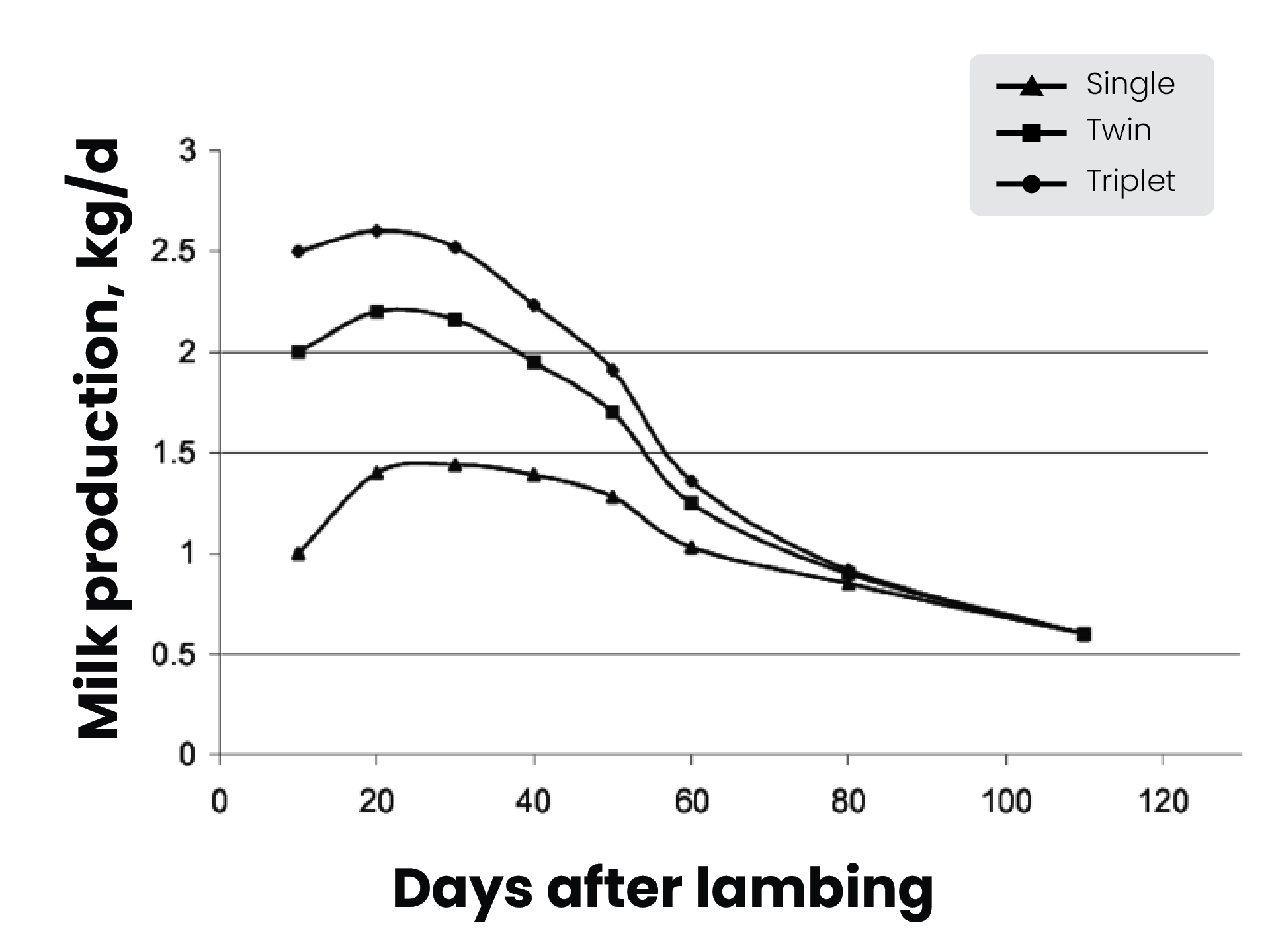
- Peak Milk Production: Around 3 to 6 weeks after lambing, the ewe typically reaches peak milk production. During this time, the lambs grow quickly as they rely heavily on the ewe’s milk for nutrition.
- Nutritional Demand: Ewes with multiple lambs (twins or triplets) produce more milk to meet the higher nutritional demands of their offspring.
Late Lactation (Weaning)
- Decline in Milk Production: As the lambs grow older and begin to graze, their reliance on the ewe’s milk decreases. The ewe’s milk production will gradually decline as the demand from the lamb reduces.
- Weaning: Natural weaning occurs when lambs are 8-12 weeks old, though it can happen earlier in some management systems. At this point, the ewe’s milk production tapers off significantly, and her udder shrinks as it stops producing milk.